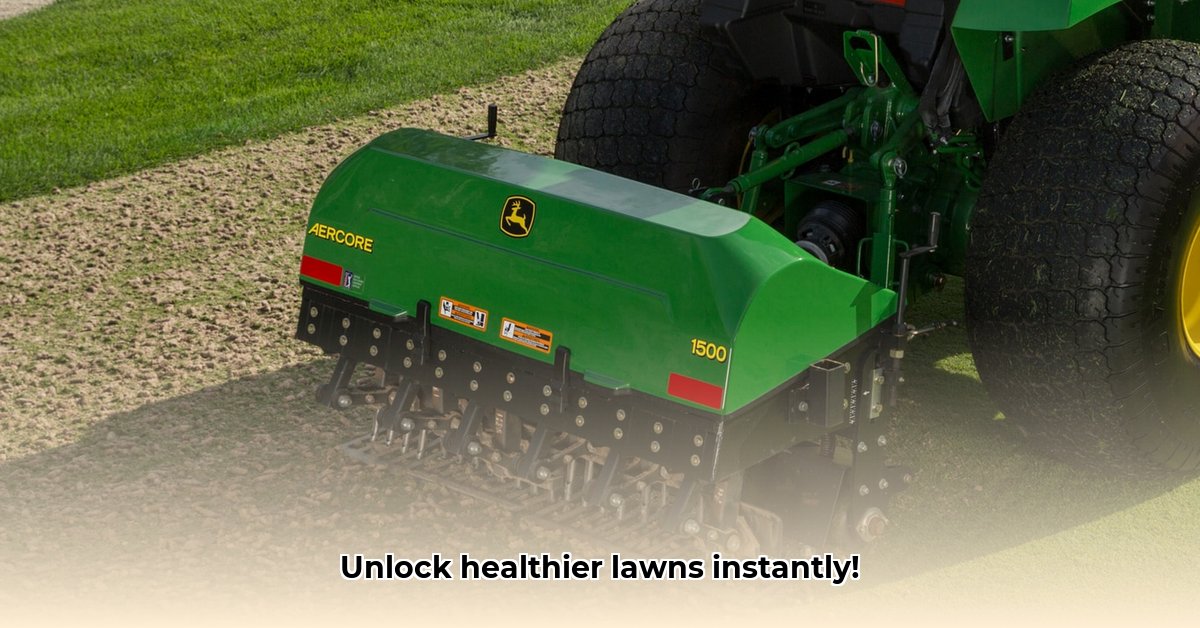
Choosing the Right Aerator for Your Needs
A healthy lawn starts with healthy soil, and that's where a lawn aerator comes in. But with so many options, choosing the right tractor-mounted aerator can be daunting. This guide simplifies the process, helping you achieve a lush, green lawn. Before selecting an aerator, consider your lawn's size, soil type (clay, sandy, loam), and budget. A smaller lawn might only need a lightweight model, while large properties require more powerful equipment. For help with tractor attachments, check out this helpful resource: Hitch Adapters.
Understanding Your Lawn's Needs
First, assess your lawn. How large is it? What type of soil do you have? Is it compacted? Answering these questions will help determine the appropriate aerator type and size. Clay soils, for instance, often benefit more from core aeration than sandy soils.
Types of Tractor-Mounted Aerators
Several types of aerators attach to lawn tractors, each with advantages and disadvantages:
Core Aerators: These remove small soil plugs, creating significant air pockets. They're effective for most soil types and provide long-lasting results. (Think of it as giving your soil a deep cleaning.)
Spike Aerators: These use metal spikes to puncture the soil, improving drainage but offering only surface-level improvement. They are less effective than core aerators, especially on compacted soil. (More like scratching the surface.)
Slit Aerators: These create narrow slits, primarily for thatch removal. They are less effective at aeration than core aerators. (Best for removing the layer of dead grass.)
| Aerator Type | Advantages | Disadvantages | Best Suited For |
|---|---|---|---|
| Core Aerator | Best overall soil health; long-lasting results | More expensive; requires more tractor power | Most soil types; larger lawns; long-term health |
| Spike Aerator | Affordable; easy to use | Less impact; only surface-level improvement | Lightly compacted soil; small lawns; quick fix |
| Slit Aerator | Good for thatch removal; improves drainage | Doesn’t create air pockets; less effective aeration | Lawns with heavy thatch; drainage problems |
Matching Aerator to Your Tractor and Budget
Beyond the aerator type, consider your tractor's capabilities. Consult your tractor's manual to determine its safe weight capacity and recommended attachment width. Overloading your tractor is dangerous and can cause damage. Budget also plays a role; higher-priced models usually offer more features and durability. Do your research to find the best balance of quality, features, and price.
Aerating Your Lawn: A Step-by-Step Guide
Follow these steps for optimal results:
Preparation: Mow your lawn short for better visibility and to prevent damage to the aerator. Remove any large rocks or debris.
Secure the Aerator: Attach the aerator firmly to your tractor, carefully following the manufacturer's instructions.
Aerate: Drive slowly and methodically, overlapping passes to ensure complete coverage. Consistent speed is key for even aeration.
Post-Aeration Care: Water your lawn deeply after aerating to help settle the soil and promote root growth. Avoid heavy traffic on the recently aerated area.
Optimizing Aeration for Different Seasons and Soil Types
The best time to aerate depends on your climate and grass type. Cool-season grasses (like fescue) often benefit from fall aeration, while warm-season grasses (like Bermuda) may prefer spring aeration. Avoid aerating when the soil is extremely dry or wet; aim for slightly moist conditions. Different soil types also require different approaches. Heavily compacted clay soils may need more frequent aeration than sandy soils.
Troubleshooting and Long-Term Lawn Care
Uneven aeration might indicate inconsistent tractor speed or incorrect aerator settings. For severely compacted soil, consider more frequent aeration or other soil improvement methods, such as adding compost. Regular aeration, fertilization, and watering are crucial for long-term lawn health. Consider consulting with a local agricultural extension service for tailored advice.
Key Takeaways: A Healthier Lawn Through Effective Aeration
Soil aeration is essential for healthy lawns. It allows air, water, and nutrients to reach plant roots more effectively.
Various aerator types exist, each suited to different needs and soil conditions. Consider your lawn size, soil type, and budget when choosing an aerator.
Regular aeration, combined with proper watering and fertilization, is key to long-term soil health and a thriving lawn.